

Investing for the future involves more than choosing a few funds or checking account balances when the market moves. As finances become more complex, investment decisions may need to account for taxes, retirement income, liquidity, and when money will be needed.
Professional investment management can help organize those decisions around specific goals, then monitor and adjust investments over time. For people who do not want to handle every decision themselves, that ongoing oversight can make long-term investing easier to maintain.
What Is Investment Management?
Investment management is the process of building, overseeing, and adjusting a portfolio based on an investor’s financial goals, time horizon, and risk tolerance. It can include investment strategy, asset allocation, portfolio construction, monitoring, and rebalancing.
A group of individually suitable holdings may still leave someone too concentrated in one area, exposed to more risk than intended, or poorly positioned for future income needs. Investment management considers how those holdings work together and what the portfolio is expected to accomplish.
Key Benefits of Investment Management
A Portfolio Built Around Long-Term Objectives
The amount and type of risk an investor takes should reflect what the money is meant to do. Someone saving for retirement 20 years from now may be able to accept more short-term market movement than a retiree who expects to begin withdrawals next year.
Income needs, liquidity, time horizon, and risk tolerance can influence which assets are used and how much is allocated to each one. A portfolio originally designed for long-term growth may later need to provide income, hold more readily available assets, or support charitable giving. Building around those goals gives the investments a specific job rather than treating return as the only measure of success.
More Deliberate Risk Management
Risk cannot be removed from investing, but it can be managed more deliberately. Asset allocation determines how much of a portfolio is invested across categories such as stocks, bonds, cash, and other assets, while diversification can reduce dependence on the performance of one company, sector, or asset class.
That does not prevent losses, but it can limit how heavily one poorly performing area affects the entire portfolio. Company stock, an inherited position, or an investment that has appreciated substantially may still come to represent a large share of the portfolio. Reducing that exposure may need to happen gradually when taxes or other planning issues are involved.
Market movement can push an allocation away from its original target. If one portion grows faster than another, the investor may gradually take on a different level of risk. Periodic rebalancing can bring the mix closer to its intended structure. Readers who want more detail on Portfolio Advisors’ approach can review its principles of investment management.
Ongoing Decisions Without Constant Portfolio Maintenance
Holdings need to be reviewed, allocations may require adjustment, and choices that once made sense may become less appropriate years later. Handling those responsibilities independently can take considerable time, especially as the number of accounts and investments grows.
Professional oversight can reduce that workload and help investors respond more deliberately during periods of volatility. Sharp gains or losses can tempt people to chase recent performance, sell during downturns, or react to short-term headlines. An established strategy gives investors a basis for deciding whether action is actually needed instead of reacting automatically to market swings.
Better Coordination of Taxes and Investment Choices
Taxes can change the value an investor ultimately keeps from gains, income, and withdrawals. Investment decisions may therefore need to account for where assets are held, when gains are realized, and whether tax-loss harvesting may be appropriate.
Taxable, tax-deferred, and tax-free accounts do not all create the same tax consequences. A tax-aware investment strategy may take those differences into account when placing investments or deciding when to sell them. The approach depends on the investor’s situation and should be coordinated with broader tax planning.
Reducing taxes should not come at the expense of the investment strategy. Tax decisions still need to support the purpose and structure of the portfolio.
A Portfolio That Can Change as Your Life Changes
Major life events can change what a portfolio needs to provide. Retirement may create a need for more accessible assets and a plan for withdrawals, while an inheritance can increase the amount available to invest.
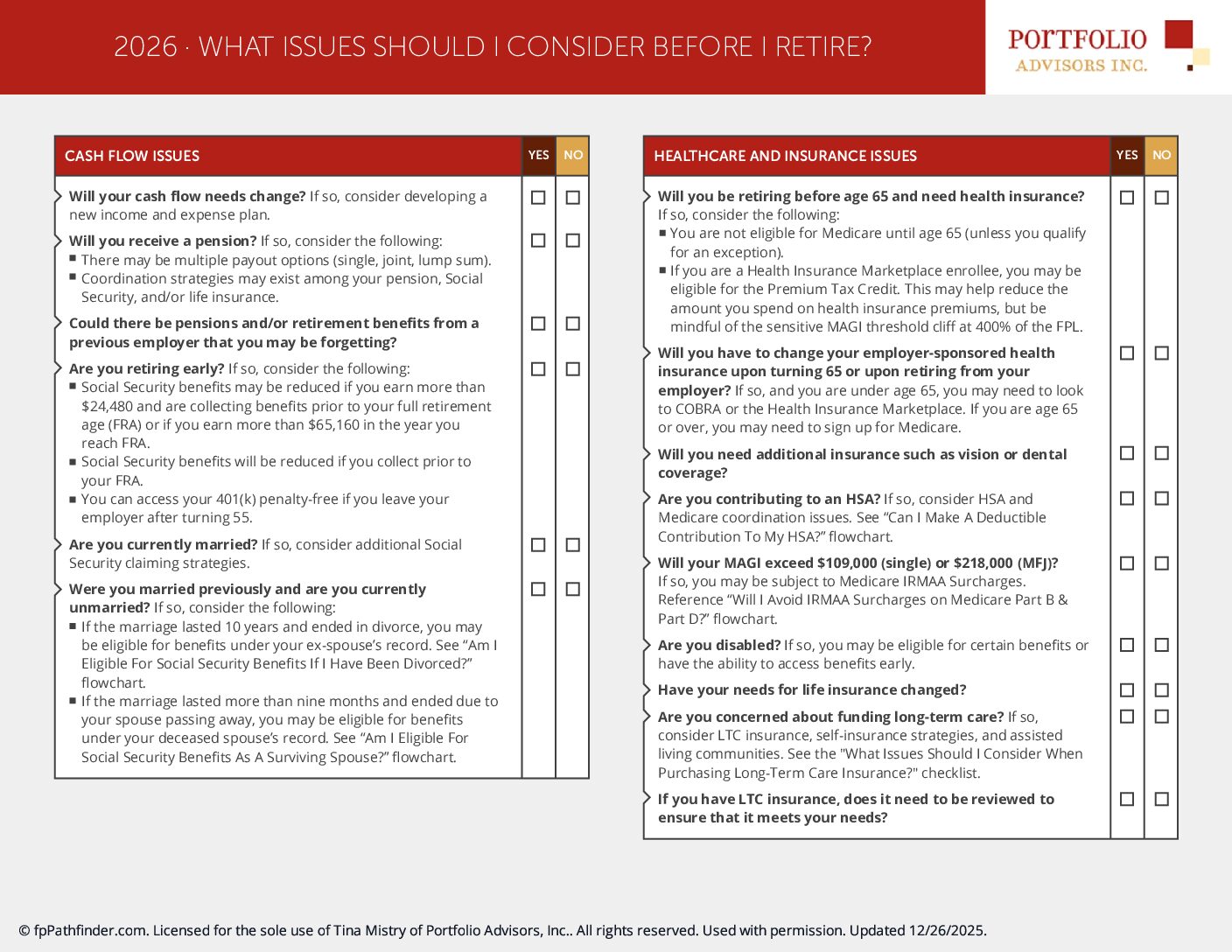
A change in income, new family responsibilities, or a business sale can create a different set of investment needs. The existing mix may need to account for new cash to invest, different spending expectations, or a change in how much money needs to remain accessible. For people nearing retirement, a retirement planning checklist can help identify financial issues that may affect the portfolio before withdrawals begin.
How Professional Investment Management Works
Before a portfolio is built or changed, an advisor needs to understand what the money is for, what assets already exist, when those assets may be needed, and how much uncertainty the investor is comfortable accepting. Those details help shape the investment strategy and asset allocation.
An investment policy statement, or IPS, may document the portfolio’s objectives, risk tolerance, time horizon, liquidity needs, and other guidelines for future investment decisions. Once the strategy is implemented, reviews can track performance, changes in allocation, and whether the portfolio has moved away from its intended structure.
Those reviews are not limited to market performance. They may also account for new contributions, withdrawals, cash needs, or holdings added to the portfolio. The goal is to determine whether the current investments still reflect the established strategy rather than making changes simply because markets have moved.
The manager’s authority depends on the arrangement. In discretionary management, investment decisions can be made within the agreed strategy without seeking approval for every trade. In a non-discretionary arrangement, the client approves recommendations before they are carried out. Rebalancing or other adjustments may follow when the portfolio drifts from its target.
Active and Passive Strategies Can Both Play a Role
Active management generally involves selecting investments with the goal of outperforming a market benchmark. Passive management seeks to track an index or market segment, often through index funds or similar investments.
Passive strategies may offer broad market exposure at relatively low cost, while active management may be used where security selection or other decisions are expected to add value. Active strategies may involve more trading, which can affect expenses and taxes in some accounts.
A portfolio does not have to rely entirely on one approach. An investor may use passive investments for broad market exposure while using active management in selected areas where a more hands-on strategy fits the objective. Cost, tax treatment, risk, and the role each holding plays can influence that mix, making the purpose of each investment more useful than short-term predictions about which style will perform better.
How Investment Management Connects with Financial Planning
Investment choices can interact with decisions being made elsewhere in a financial plan. For example, charitable giving may affect whether appreciated securities are sold or donated, while estate planning decisions may influence how certain assets are held or transferred.
Cash flow, debt, insurance, and other obligations can affect how much money is available for long-term investing. Looking at those areas together can help identify tradeoffs that might be missed if investment accounts are considered separately from the rest of the financial plan.
When Professional Investment Management May Be Useful
Some investors have relatively simple portfolios and are comfortable managing them independently. Professional help may become more useful when the number of accounts, complexity of the holdings, or time required begins to increase.
A household may have workplace retirement plans, IRAs, taxable brokerage accounts, and investments held at different institutions. Even when each account is reasonable on its own, the combined holdings can contain unintended duplication or fail to follow one coordinated strategy.
For example, someone may hold similar stock funds in a 401(k), IRA, and taxable brokerage account without realizing how much of the overall portfolio is exposed to the same market segment. Reviewing the accounts together can make it easier to see whether the total allocation matches the investor’s intended mix.
Investors who would rather not research holdings, monitor allocations, rebalance accounts, and decide when adjustments are appropriate may value delegating those responsibilities. Managing those tasks can become difficult to fit around work, family, and other demands, particularly as the portfolio grows more complex.
Investment Management with Portfolio Advisors
Portfolio Advisors is an independent Registered Investment Advisor serving individuals and families in Fresno, California’s Central Valley, and across the country. As a fee-only fiduciary firm, it provides investment management within a broader financial planning relationship.
Portfolio Advisors takes a hands-on, boutique approach built around knowing clients personally and understanding what their assets need to accomplish. Investment management can be coordinated with the planning work the firm provides rather than treated as a separate service.
Prospective clients can learn more about Portfolio Advisors’ investment management and financial planning services when deciding whether that approach fits their needs.